Skip to content
Koek GmbH
Menu
Operational controls

Security services for controlled protection in daily operations

Security only works when it is operated consistently. For practices, care providers, healthcare organizations and regulated SMEs, that means clear standards, stable controls and day-to-day execution that does not depend on improvisation. Koek provides security services in Hamburg with a practical focus on endpoint protection, firewall operations, identity controls and the routines needed to keep protection effective in live operations.

Schwerpunkte

Focused on operated controls rather than static concepts
Aligned with support, monitoring and change processes
Fit for lean teams with high protection needs and limited operating capacity

Typical starting point

Many organizations already have individual security tools in place, but protection is fragmented. Devices are not managed to the same standard, firewall rules have grown over time, user permissions are too broad, and security tasks are handled only when there is time. In healthcare and care environments, this creates operational risk: staff need stable access, patient-related processes must keep running, and security changes cannot disrupt daily work. A structured security service creates order, defines responsibilities and turns isolated controls into an operating model.

From assessment to operations

The service usually begins with a review of the current environment: endpoints, user identities, access paths, firewall setup, Microsoft 365 security settings and backup-related dependencies. Based on that review, priorities are defined and a realistic target state is agreed. The focus is not on adding complexity, but on establishing the controls that matter most in daily operations. Once the baseline is set, security moves into managed operation: policies are maintained, changes are documented, exceptions are handled in a controlled way, and recurring checks help keep the environment aligned over time.

How this service looks in practice

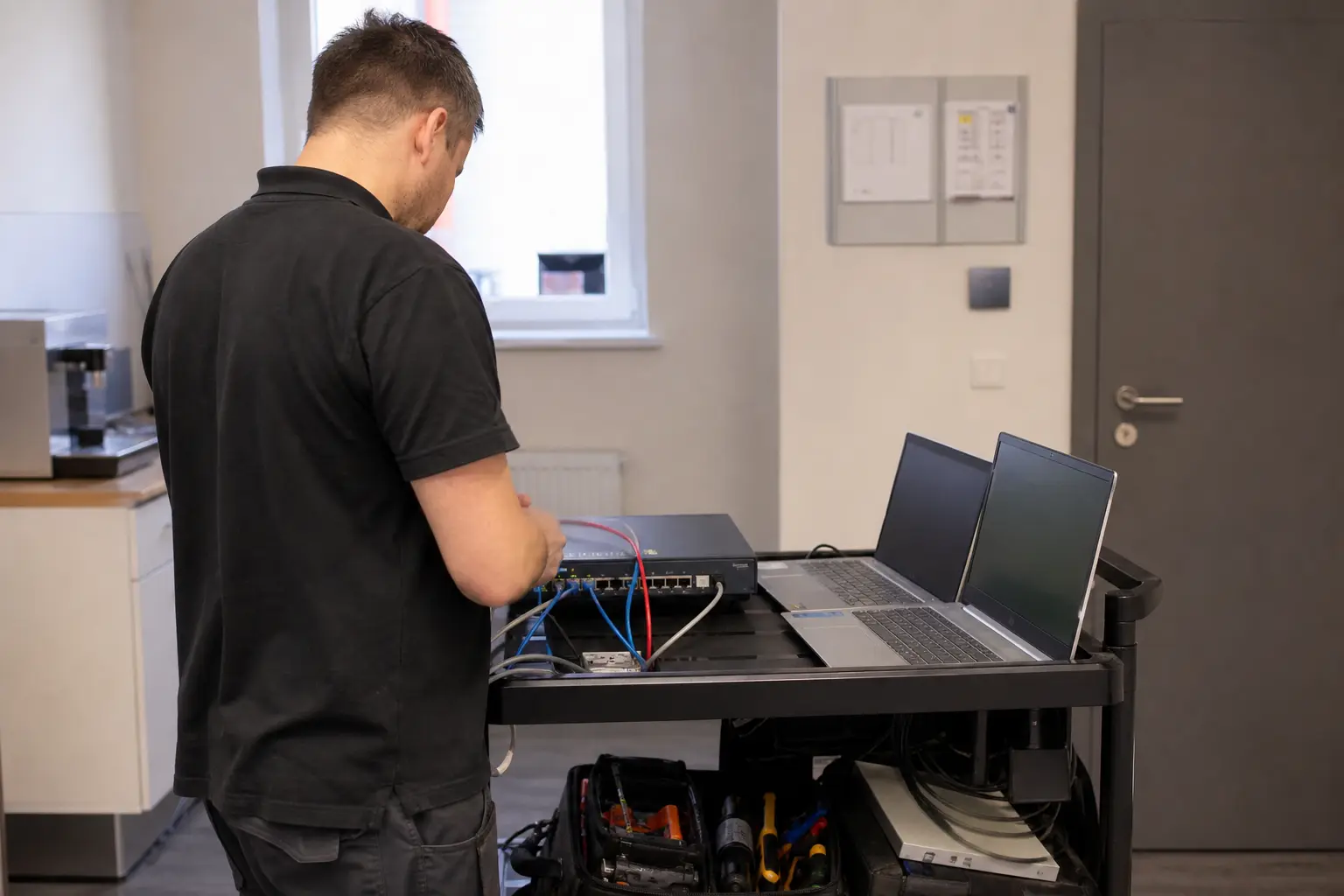
In practice, security services often include managed endpoint protection, device standards, firewall administration, secure remote access, identity and access controls, MFA-related rollout support, and operational handling of security-relevant changes. For practices and care providers, this also means working around real operating conditions: shared workstations, mobile teams, external service providers, multiple locations and limited internal IT capacity. The goal is not maximum complexity, but dependable protection that supports staff, reduces avoidable risk and remains manageable as the organization grows.

Security with operational fit

A security concept is only useful if it fits the way the organization actually works. In healthcare-related environments, systems must remain available, teams need fast and predictable access, and changes have to be introduced carefully. Koek therefore approaches security as part of operations: with defined responsibilities, practical escalation paths, and controls that can be maintained over time. This is especially important where patient care, scheduling, documentation and communication depend on stable IT every day.

Relevant areas of protection

The most common focus areas are endpoints, network boundaries and identities. Endpoints need consistent configuration, protection and lifecycle handling. Firewalls need clear rules, review routines and controlled changes. Identities need structured user management, role-based access where possible and stronger sign-in protection for critical systems. Around these areas, supporting measures such as backup alignment, logging, secure administration and cloud security settings help create a more resilient overall environment.

For practices, care providers and regulated SMEs

Organizations with sensitive data and limited tolerance for downtime need security that is both disciplined and workable. Medical practices, MVZ structures, care services and healthcare organizations often face exactly this challenge: high operational pressure, distributed teams and systems that must remain accessible. The same applies to regulated SMEs that need reliable standards without building a large internal security function. A managed security service helps close that gap with clear processes, technical controls and ongoing operational attention.

Operational outcomes

  • • More reliable baseline security in daily operations
  • • Faster response to security-relevant changes and alerts
  • • Better preparation for audits, incidents and internal review questions

Scope of delivery

  • • Operating routines for endpoint, firewall and identity controls
  • • Regular checkpoints for policies, exceptions and compliance
  • • Traceable change, approval and escalation flows
  • • Integration into monitoring, support and incident handling

Best fit

Organisations with security tooling but limited operating capacity
Practices and care providers needing solid baseline protection that is actually maintained
Businesses that want controls embedded consistently into daily work
Approach

From assessment to operations

01

Assess the risk posture

We prioritise protection needs, attack surfaces and critical systems based on the real operating environment.

02

Design the controls

Policies, hardening, MFA, network segments and response paths are aligned into one coherent control model.

03

Implement technically

We implement controls close to production and validate them together with the customer team.

04

Operate continuously

Monitoring, updates, awareness and incident readiness stay in place as an ongoing operating layer.

Case study

How this service looks in practice

FAQ

Questions about this service

Relevant next steps

Related pages with strong fit

Next step

Review this service in your context

Need security that works reliably in daily operations? Talk to Koek about a practical security setup for your practice, care service or organization.