Skip to content
Koek GmbH
Menu
Operational stability

Monitoring and maintenance before disruption hits operations

When systems fail without warning, care delivery, appointments and internal processes are affected immediately. Proactive IT monitoring and structured maintenance help identify risks early, reduce avoidable downtime and create more control in day-to-day operations. For care services, practices, healthcare organizations and regulated SMEs, this means fewer surprises, clearer visibility and maintenance that fits live operations instead of disrupting them.

Schwerpunkte

Prioritised alerting instead of raw alert noise
Maintenance windows aligned with sensitive operating hours
Status and trend reporting for technical teams and management

Typical starting point

Many organizations only notice technical issues once users are already affected: slow systems, unstable connections, storage limits, failed backups, overloaded devices or recurring application errors. In healthcare and care environments, these issues quickly become operational problems because teams depend on reliable access to documentation, communication and connected systems.

A structured monitoring and maintenance setup creates a different operating model. Relevant systems are observed continuously, warning signs are reviewed early and recurring maintenance tasks are handled in a controlled way. This helps reduce reactive firefighting and gives management and operations teams a clearer basis for decisions.

What monitoring and maintenance cover

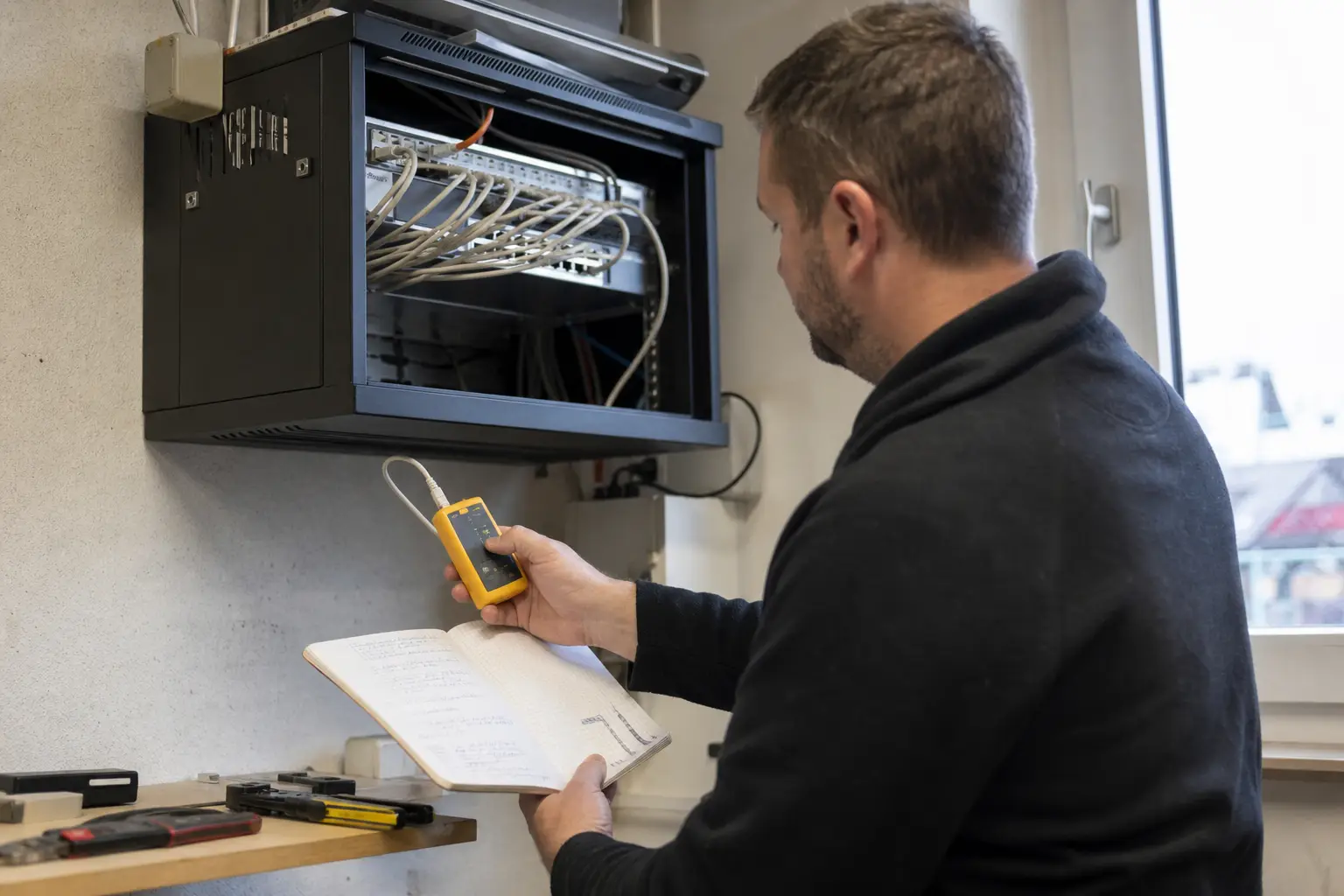
The service typically includes oversight of servers, workstations, network components, core services, backup jobs and selected cloud or Microsoft 365-related elements where relevant. The goal is not to collect noise, but to focus on signals that matter for availability, performance, security and continuity.

Maintenance usually includes operating system updates, patch coordination, health checks, capacity review, service validation and planned interventions during agreed maintenance windows. In environments with sensitive operations, changes should be prepared carefully, documented clearly and aligned with business-critical times.

From assessment to operations

The first step is to understand the current environment: which systems are critical, where dependencies exist, what is already monitored and where blind spots remain. Based on that, a practical monitoring scope can be defined together with maintenance routines, escalation paths and responsibilities.

Once the setup is in place, monitoring becomes part of regular operations. Alerts are reviewed, recurring issues are identified, maintenance is scheduled and the overall system state becomes more transparent over time. This is especially valuable for organizations that need stable operations but do not want internal teams tied up with constant technical follow-up.

How this service looks in practice

In practice, monitoring and maintenance should support operations quietly in the background. Devices and services are checked continuously, unusual behavior is flagged early and routine maintenance is handled before small issues turn into service interruptions. Planned work is coordinated to minimize impact on care delivery, consultation hours and administrative processes.

For care services and practices, this often means more predictable IT operations, fewer urgent incidents and better preparation for changes. For growing organizations, it also creates a more stable foundation for security, backup, cloud services and future infrastructure decisions.

Why this matters in healthcare and regulated environments

Healthcare-related organizations often work with time-sensitive processes, distributed teams and systems that must remain available throughout the day. Even minor technical instability can affect documentation, communication, billing or coordination with external partners. Monitoring and maintenance help reduce this operational risk by making system health visible and by addressing technical debt in a controlled manner.

In regulated environments, a structured approach also supports better governance. Planned maintenance, documented changes and clear responsibilities make IT operations easier to manage and easier to align with internal requirements.

A practical fit for managed IT operations

Monitoring and maintenance work best when they are connected to the wider operating model. Alerts should lead to action, maintenance should fit support processes and findings should inform security, backup and infrastructure planning. That is why this service is often part of a broader managed IT setup rather than an isolated technical tool.

For organizations in Hamburg looking for dependable IT operations, the focus is simple: detect issues early, maintain systems consistently and keep business-critical environments stable without unnecessary complexity.

Operational outcomes

  • • Higher availability for critical applications and services
  • • Fewer unplanned disruptions outside agreed maintenance windows
  • • Better data for priorities, SLAs and investment decisions

Scope of delivery

  • • Monitoring for servers, networks, endpoints and cloud services
  • • Maintenance plans for patches, firmware and lifecycle topics
  • • Alert rules with escalation logic and ownership
  • • Regular health checks, reporting and trend review

Best fit

Organisations with multiple critical systems and dependencies
Teams without their own continuous monitoring capability
Environments where outages directly affect operations or service delivery
Approach

From assessment to operations

01

Assess the environment

We map risks, dependencies, user roles and operational bottlenecks before defining the delivery scope.

02

Set the priorities

Measures are prioritised by operational risk, security impact and implementation effort.

03

Implement and document

Technology, permissions, fallback paths and operating documentation are implemented and documented cleanly.

04

Operate and optimise

After go-live we take over monitoring, support, changes and continuous optimisation.

Case study

How this service looks in practice

FAQ

Questions about this service

Relevant next steps

Related pages with strong fit

Next step

Review this service in your context

Need a more stable IT operating model? Talk to Koek about monitoring and maintenance for care services, practices and critical business environments in Hamburg.