Skip to content
Koek GmbH
Menu
Core systems

Server and systems operations for stable core processes

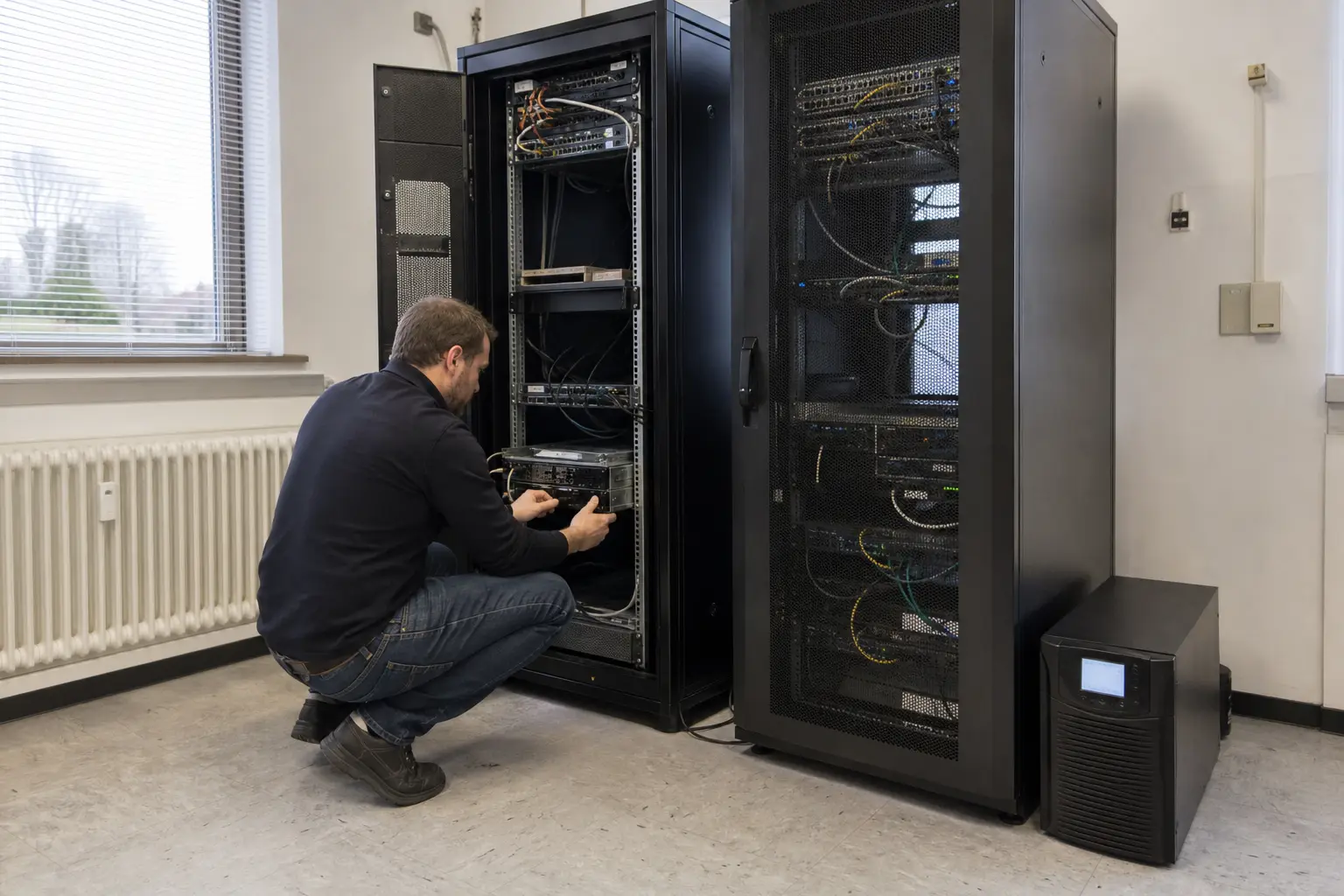
Servers and central systems still carry many of the processes that daily operations depend on: line-of-business applications, file services, identity, backups, interfaces and local infrastructure. When these systems are unclear, outdated or poorly maintained, the impact is immediate. Work slows down, risks increase and responsibilities become blurred. We support businesses, care services, practices and healthcare organizations in Hamburg with structured server administration and operations: from assessment and cleanup to stable day-to-day operation, lifecycle control and clear operating logic.

Schwerpunkte

Coverage across performance, patching, capacity and resilience
Clear roles for directory, storage, virtualisation and services
Clean integration into monitoring, backup and operations

Typical starting point

Many organizations do not start with a greenfield environment. They start with a server landscape that has grown over time: mixed hardware generations, undocumented dependencies, unclear update status, local special cases and systems that are business-critical but not actively managed. In care services and practices, this often affects scheduling, documentation, billing, file storage, user management and interfaces to other systems. The result is not always a major outage. More often, it is constant friction: slow systems, recurring incidents, uncertainty during changes and no reliable basis for planning. Our role is to bring structure into this environment, reduce operational risk and create a setup that can be run predictably.

From assessment to operations

We begin with a practical assessment of the existing environment: which servers and system roles exist, what they support, where dependencies lie, how backup and recovery are handled, what the patch and lifecycle status looks like and which risks should be addressed first. Based on that, we define a realistic operating model. This can include consolidation, role separation, migration planning, hardening, monitoring, backup alignment and clearer administrative routines. Once the target setup is agreed, we take over or support ongoing operations with a focus on stability, maintainability and transparency. The goal is not change for its own sake. The goal is a server environment that supports core processes reliably and can be managed cleanly over time.

How this service looks in practice

In practice, server and systems operations means keeping the technical core of the organization dependable. We manage operating systems, server roles, updates, access logic, storage, virtualization-related tasks where relevant, monitoring, backup coordination and operational documentation. We help define who is responsible for what, how maintenance is handled, how changes are prepared and how incidents are escalated. For healthcare-related organizations, this often includes special attention to availability, user continuity, protected data handling and the interaction between local systems, cloud services and third-party applications. The outcome is a calmer operating model: fewer surprises, clearer responsibilities and a more stable foundation for daily work.

Designed for care services, practices and regulated SMEs

Operational requirements in healthcare-adjacent environments are different from those in generic office IT. Care services and practices depend on systems that must be available during active service delivery, documentation and coordination. Downtime affects not just productivity, but patient-related and care-related workflows. That is why we approach server operations with an operator mindset: practical maintenance windows, clear fallback logic, controlled changes and attention to the systems that matter most in daily use. The same approach also fits regulated SMEs that need reliability, traceability and a more disciplined infrastructure baseline.

Clear roles, lifecycle control and stable operating logic

A stable environment depends on more than technical fixes. It requires clear role design, controlled lifecycles and a consistent operating model. We help separate critical functions where needed, reduce hidden dependencies, document system purpose and define how systems are maintained over time. This includes planning for replacement cycles, reducing unsupported components, aligning backup and recovery expectations and making administration less person-dependent. The result is an environment that is easier to understand, easier to support and less vulnerable to avoidable operational issues.

Operational outcomes

  • • A more stable base for business applications and connected services
  • • Less key-person risk and clearer ownership
  • • More predictable hardware, refresh and migration decisions

Scope of delivery

  • • Server inventory and role model
  • • Integration into patch, backup and monitoring routines
  • • Capacity and lifecycle assessment
  • • Documented recovery and handover paths

Best fit

Businesses with their own server base or hybrid estates
Practices with local infrastructure and sensitive applications
Organisations preparing for refresh, consolidation or virtualisation projects
Approach

From assessment to operations

01

Assess the environment

We map risks, dependencies, user roles and operational bottlenecks before defining the delivery scope.

02

Set the priorities

Measures are prioritised by operational risk, security impact and implementation effort.

03

Implement and document

Technology, permissions, fallback paths and operating documentation are implemented and documented cleanly.

04

Operate and optimise

After go-live we take over monitoring, support, changes and continuous optimisation.

Case study

How this service looks in practice

FAQ

Questions about this service

Relevant next steps

Related pages with strong fit

Next step

Review this service in your context

Need a clearer, more stable server environment? Talk to us about assessment, cleanup and ongoing operations for your core systems.